
01
Rebirth
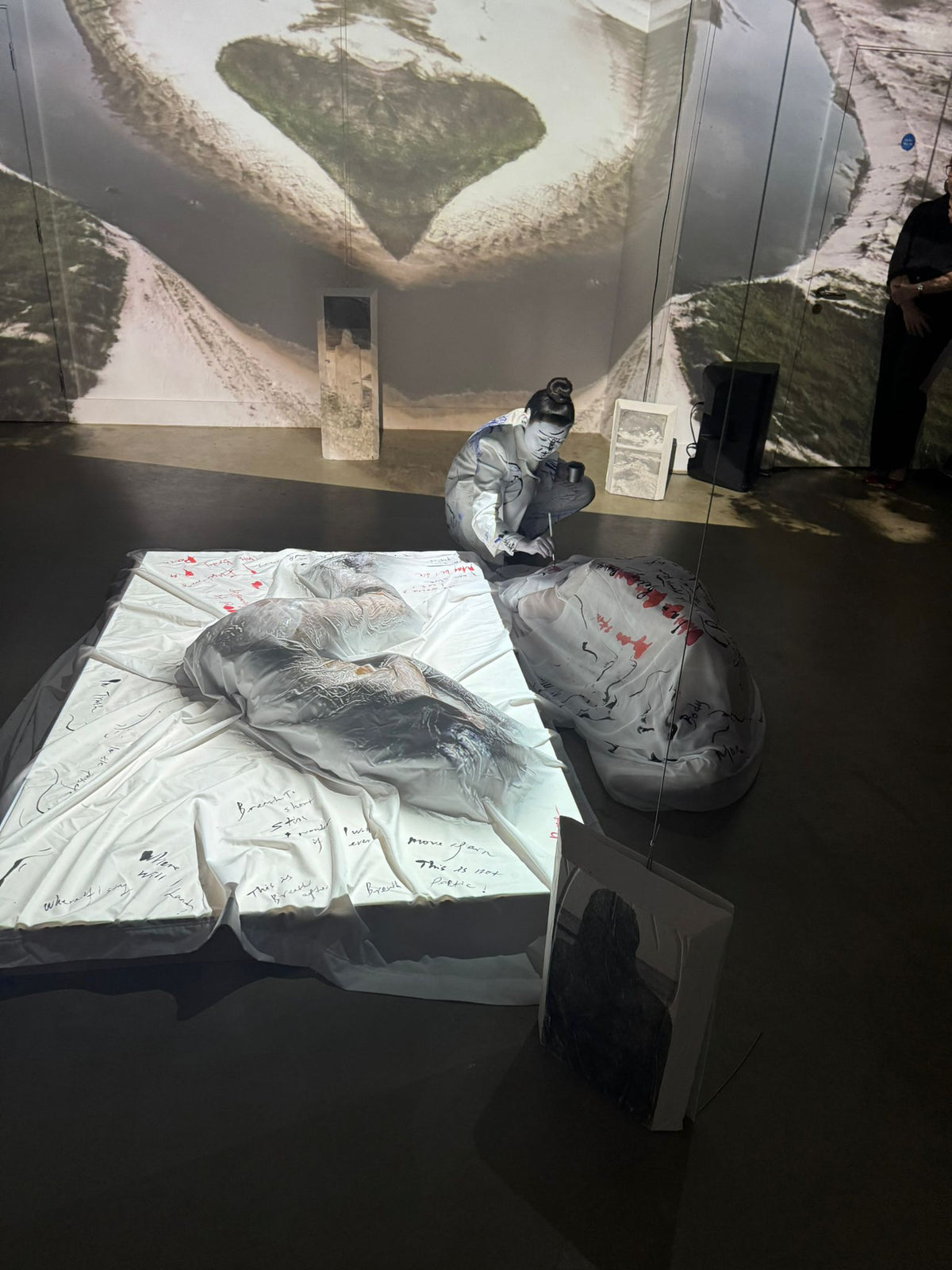
A live performance and installation born from illness, loss and the slow act of returning—creation as medicine, friendship as care and sisterhood as strength.

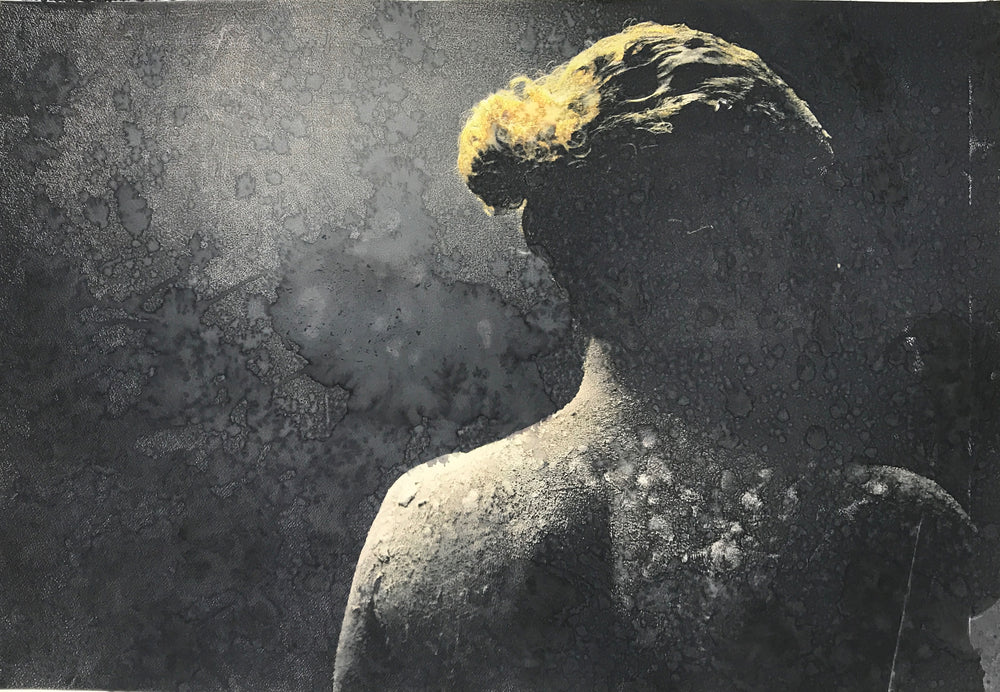
A photographic sequence where the body, landscape and memory drift into one another.
A live performance and installation born from illness, loss and the slow act of returning—creation as medicine, friendship as care and sisterhood as strength.
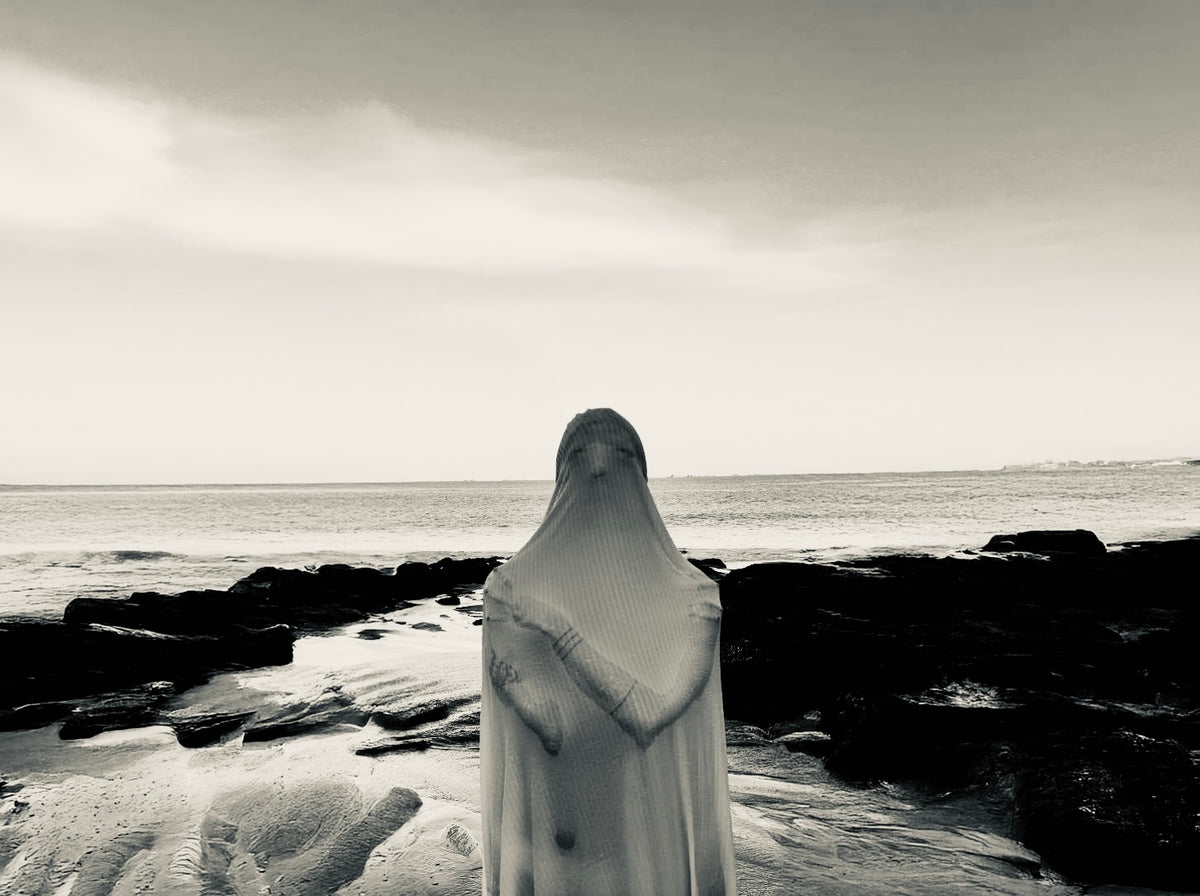
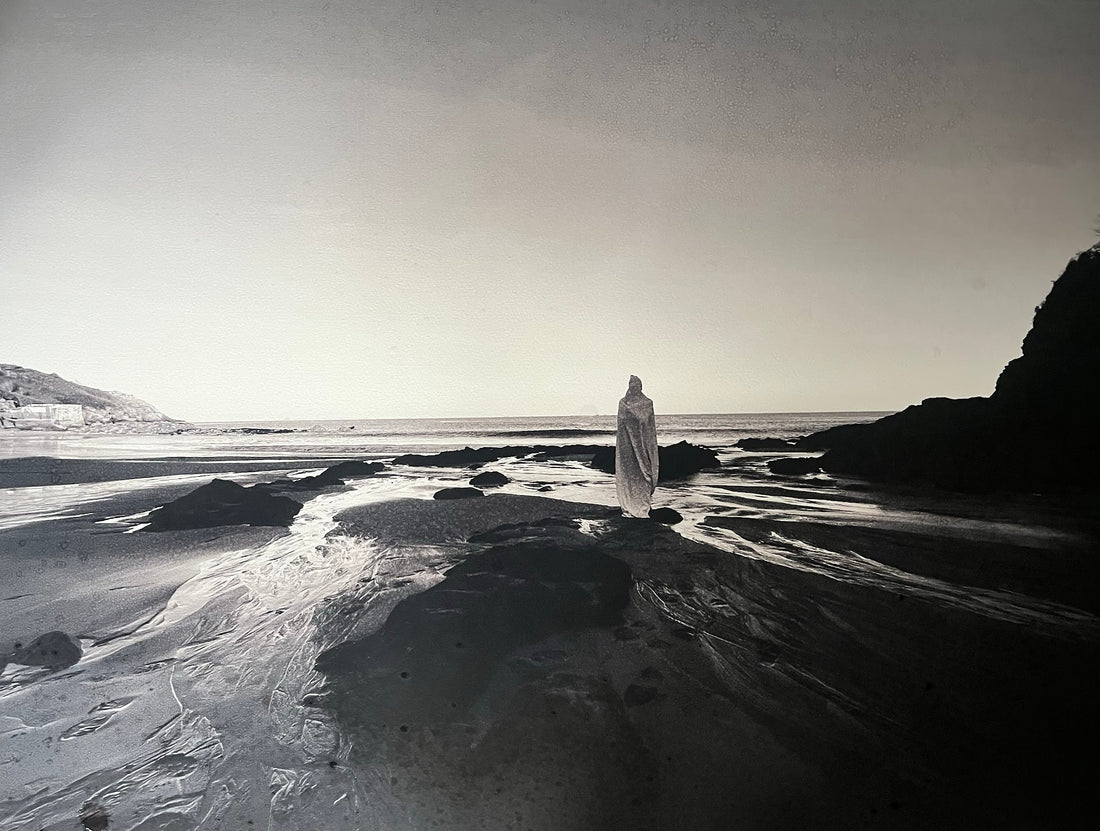
A breathing body meets the rugged Jersey coastline, suspended between disappearance and return—washed ashore at either the end of one life or the beginning of another.
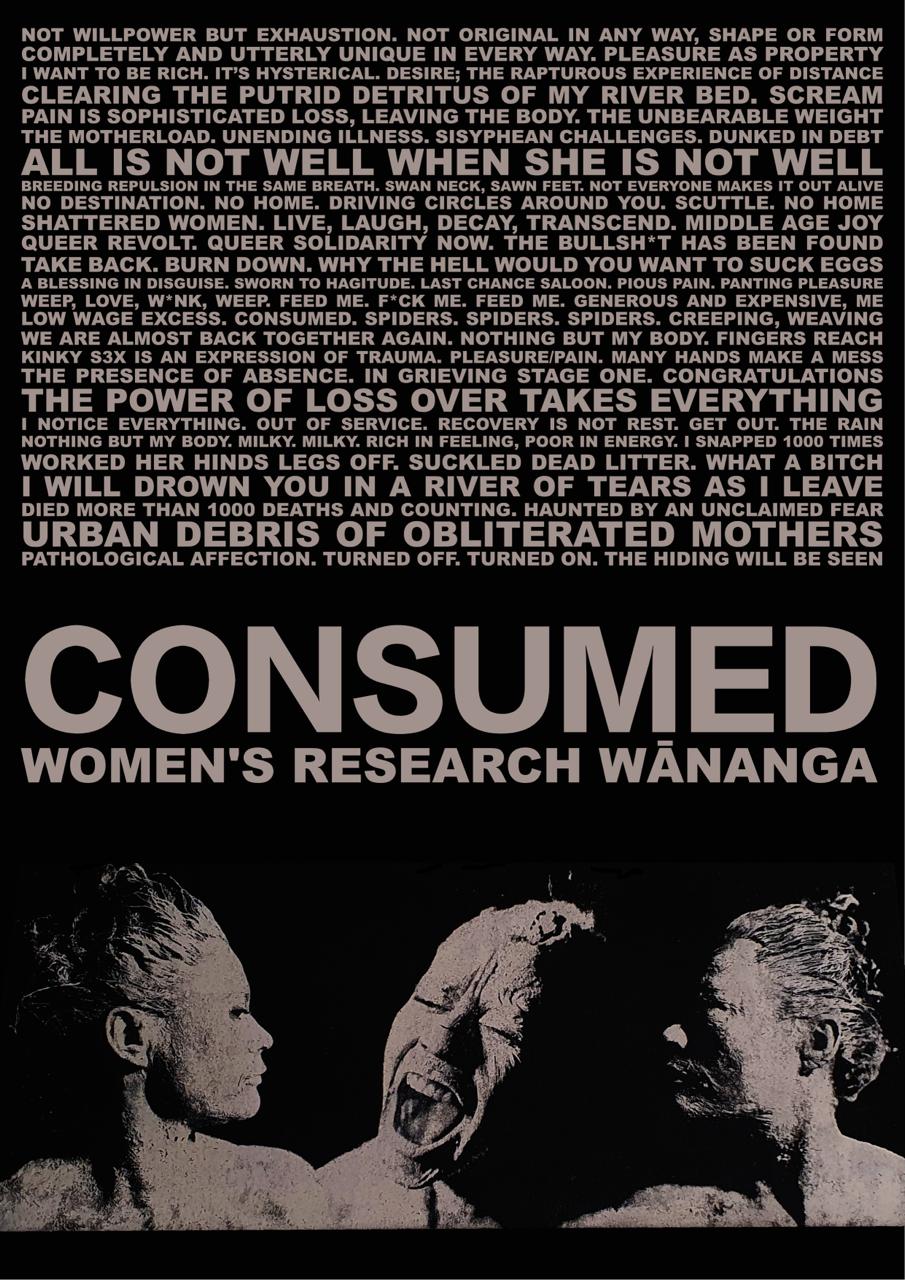
A collective of five women artists placing women’s lived experiences at the centre—exploring care, sickness, resistance, radical joy and the forces that shape and consume us.
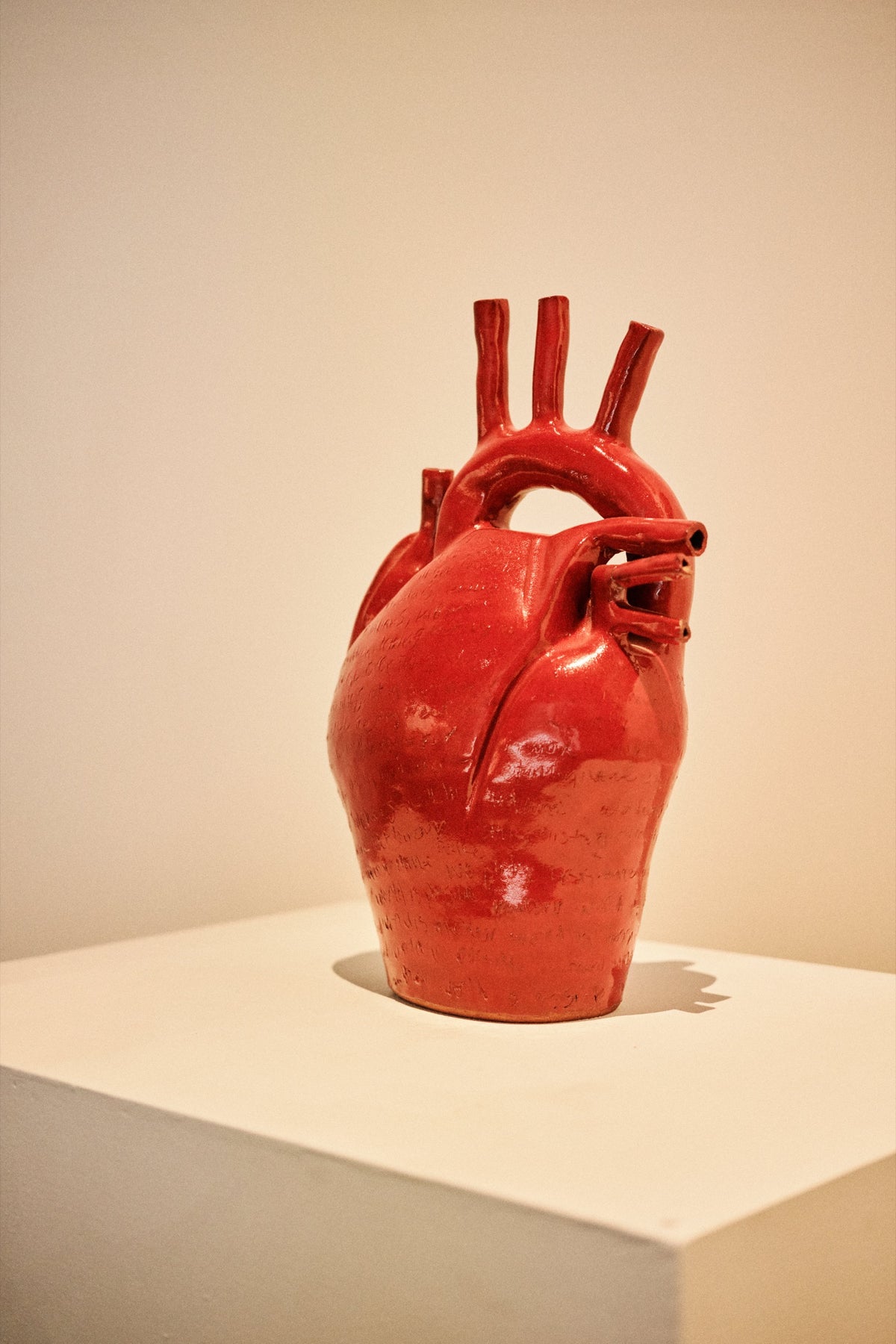
Clay has always been central to my practice as a form of protection—once used to cocoon the subjects of my photographic and print works, it has gradually moved beyond the image to become a physical presence in its own right.
When I became very ill, dreams arrived with an intensity that made them feel like another lived world. These images grew from that dreamscape: fragments of earlier work, photographs taken through ordinary days, and collaged elements drawn together through memory, vulnerability and altered time.
Within many of the images, I am present—sitting vulnerable and naked—with Elvis, my beloved dog, beside me. We are partly concealed, held inside landscapes that hover between protection and exposure, presence and disappearance.
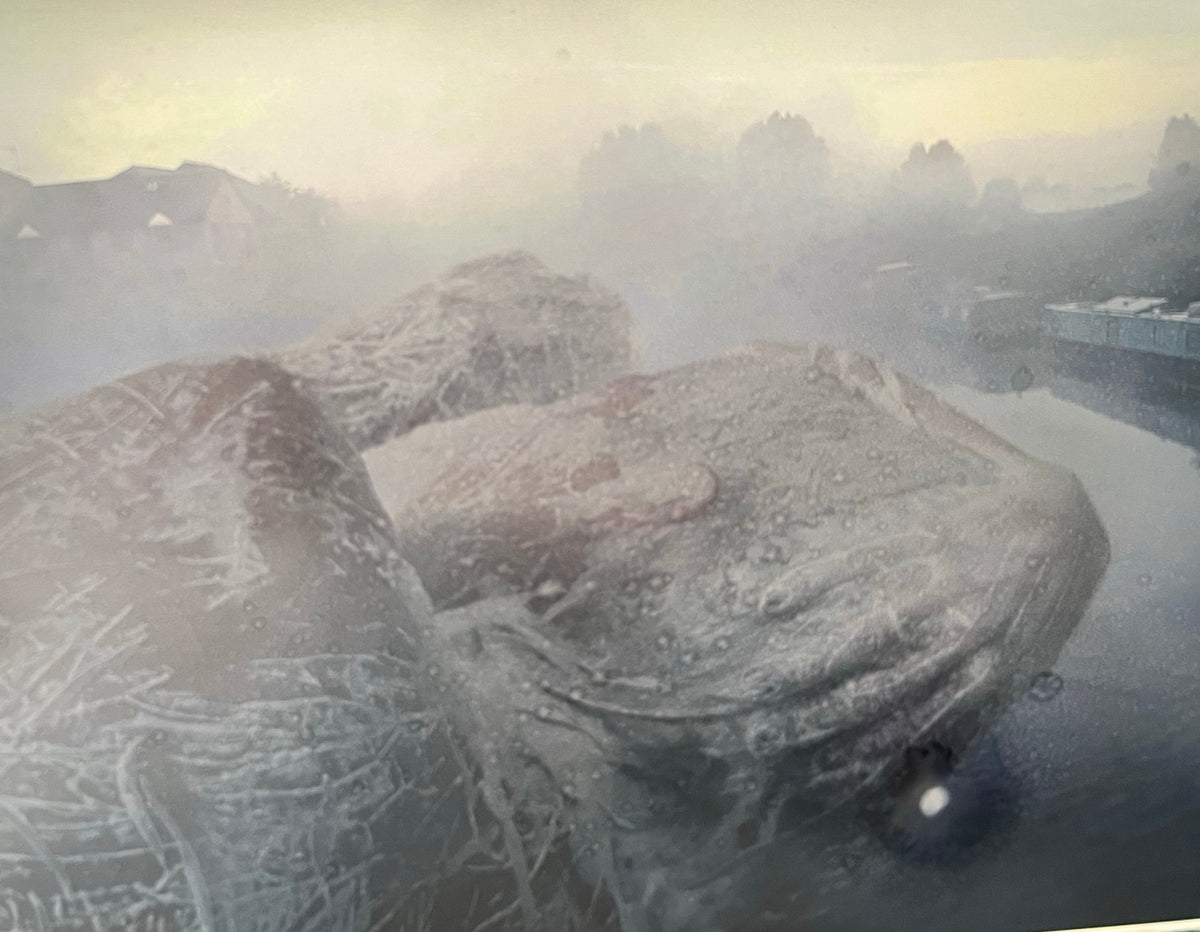
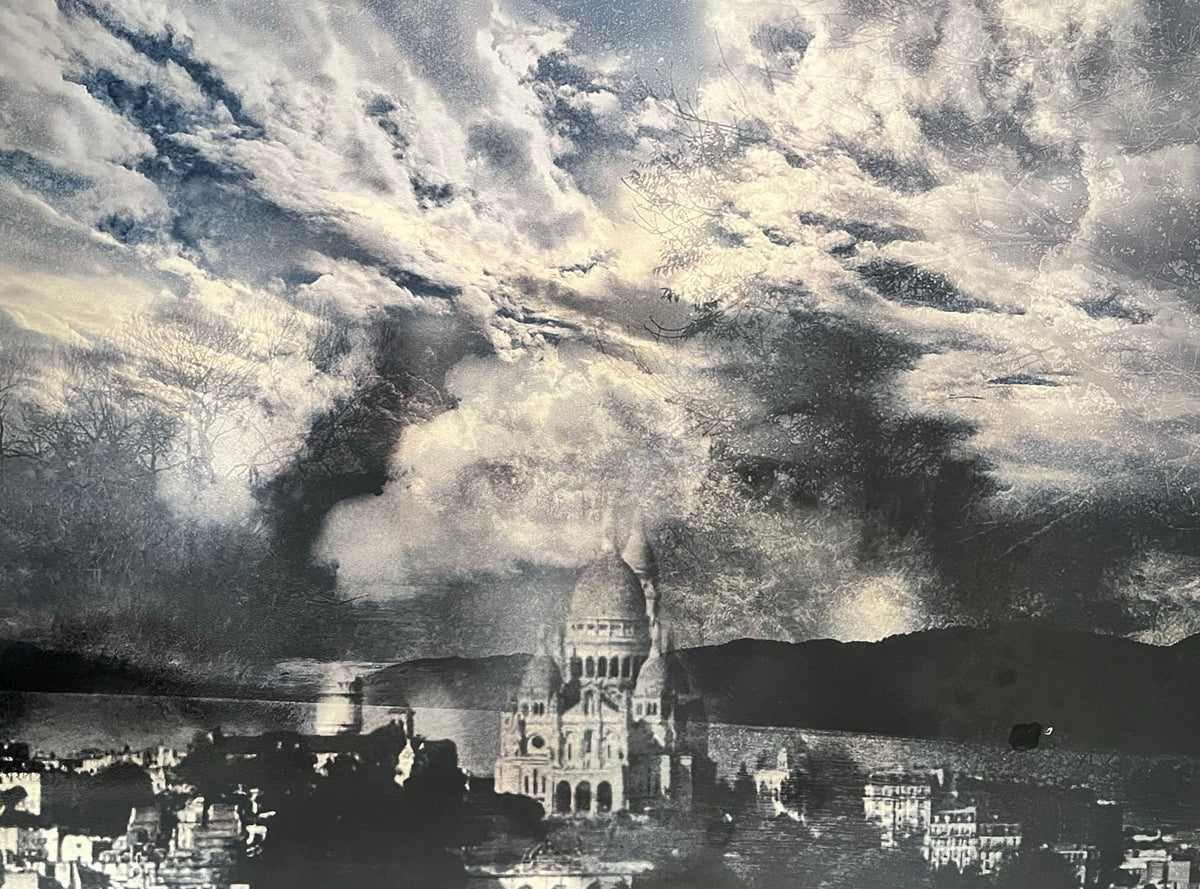
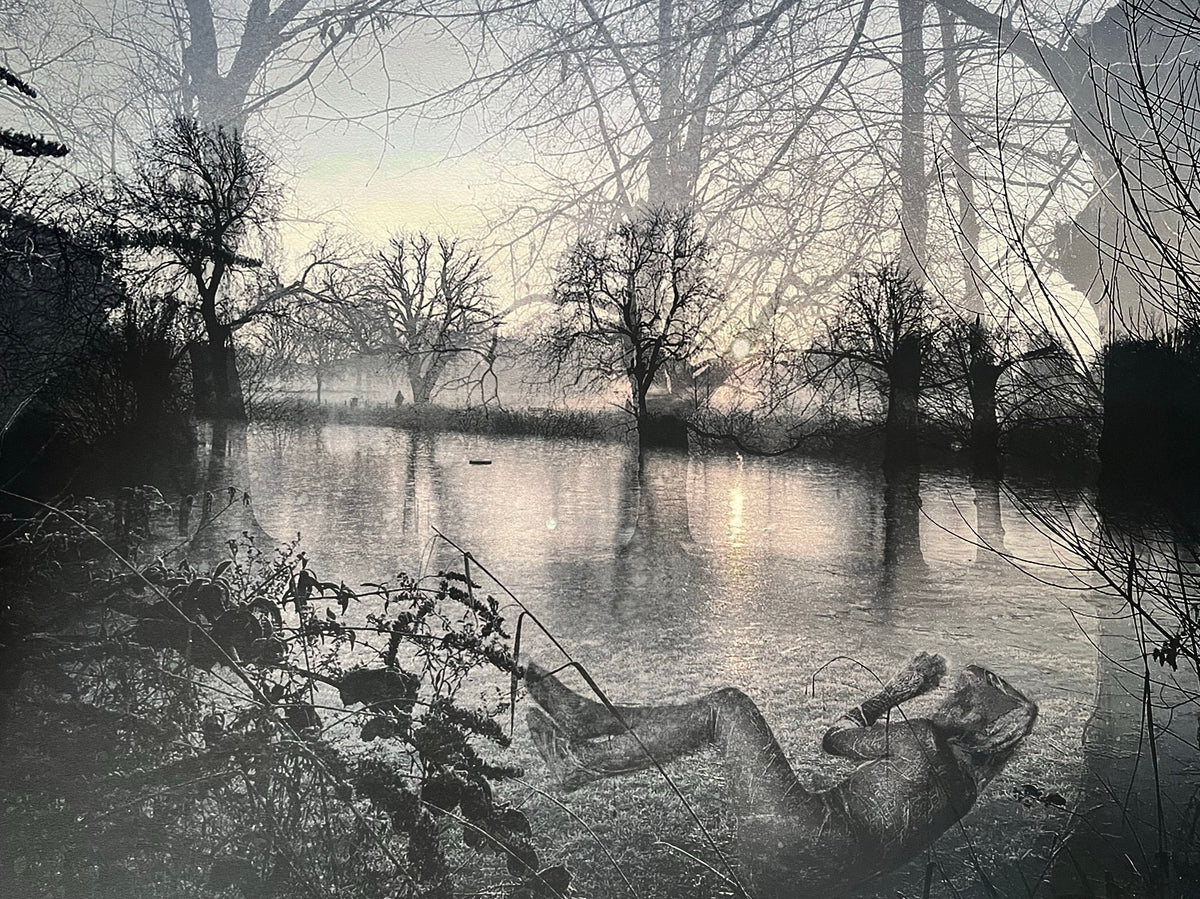
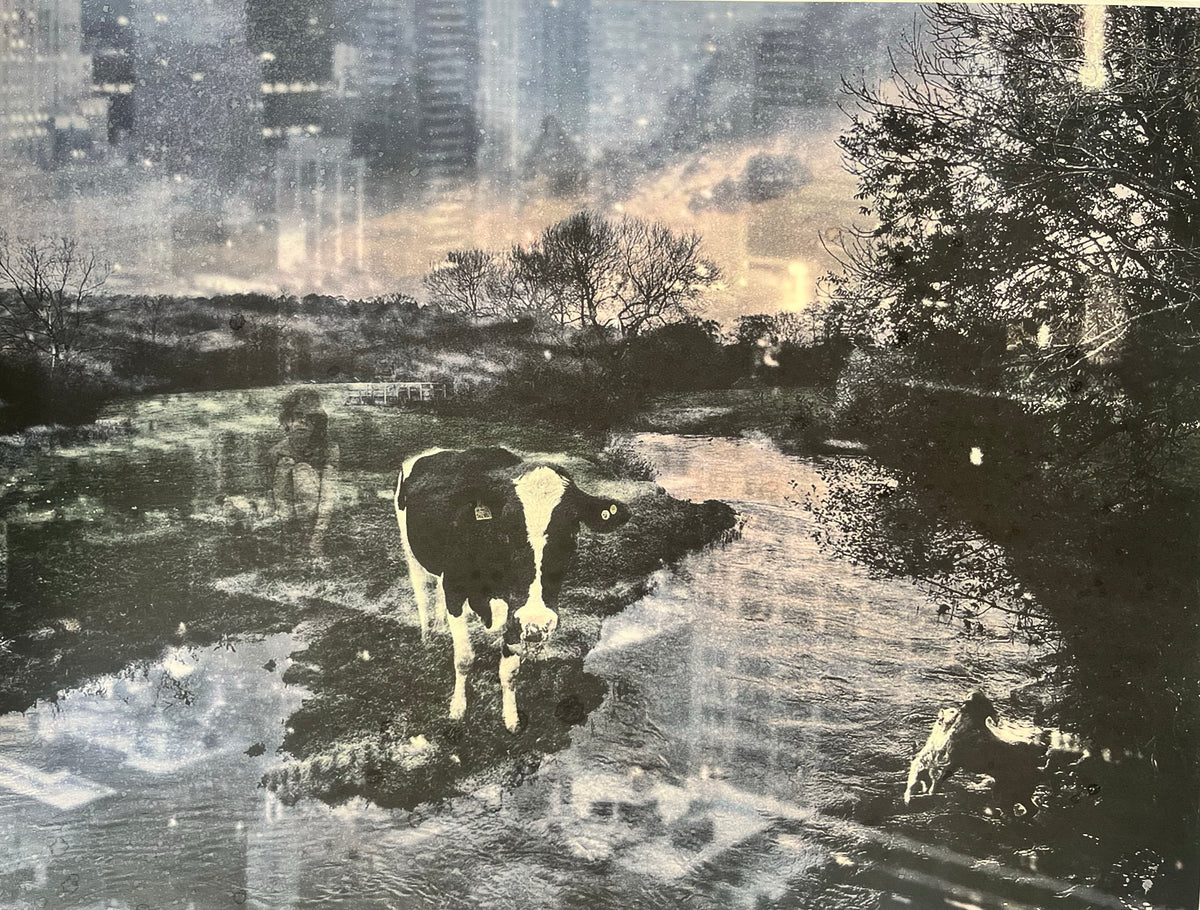
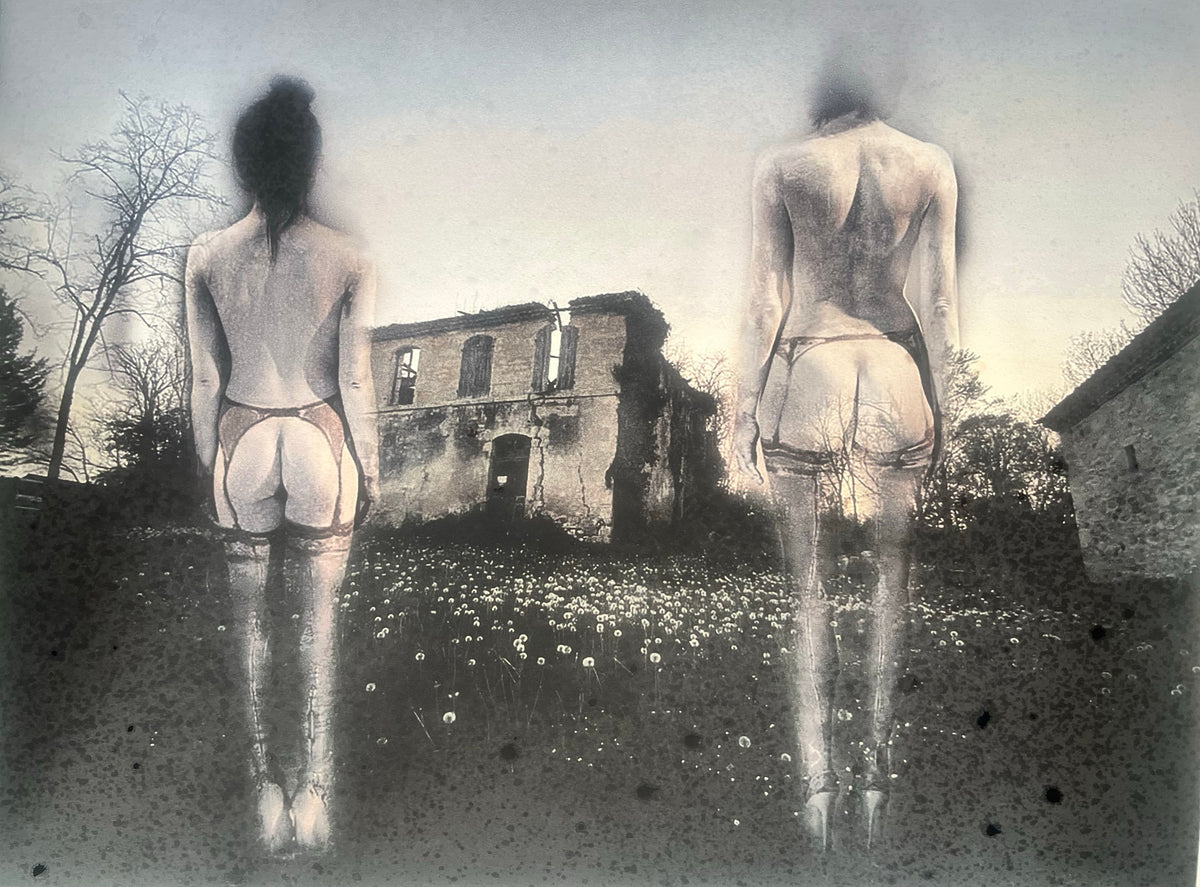
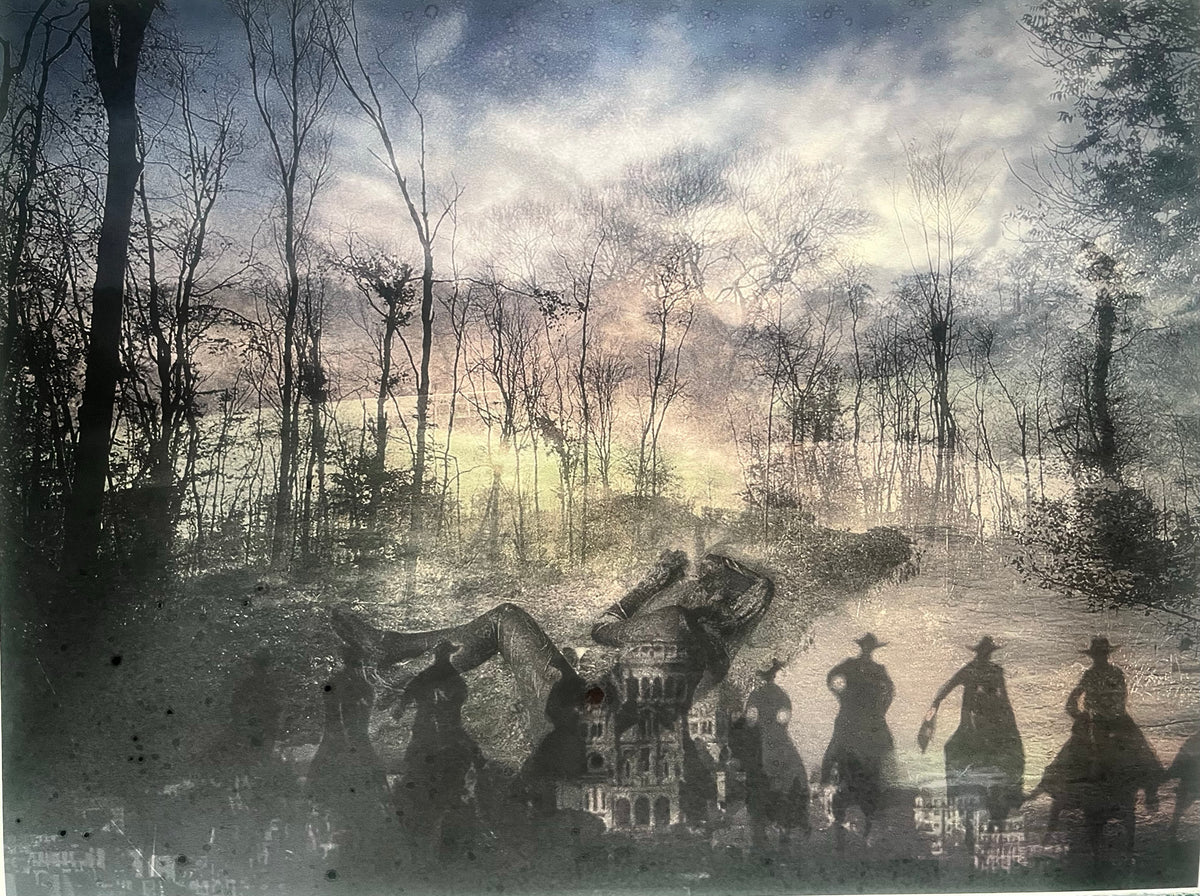
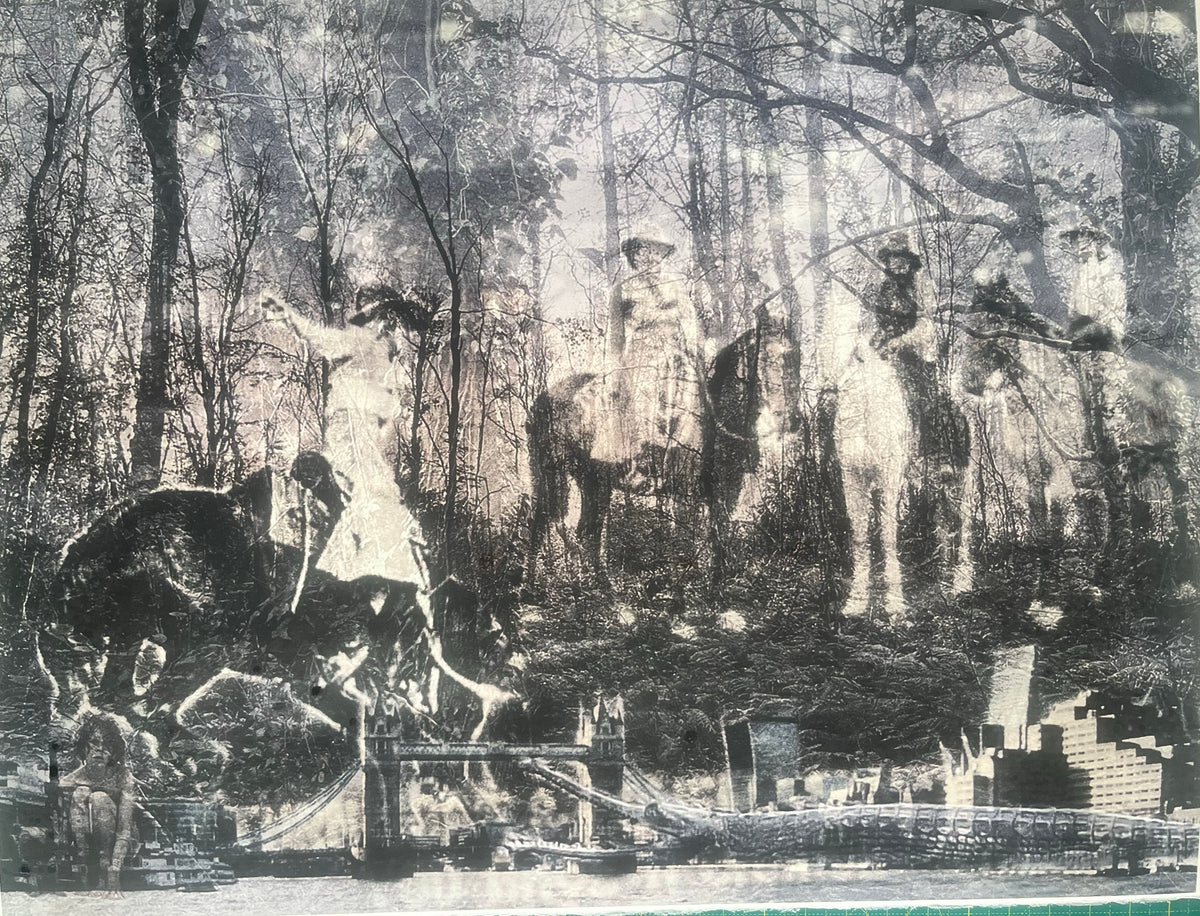
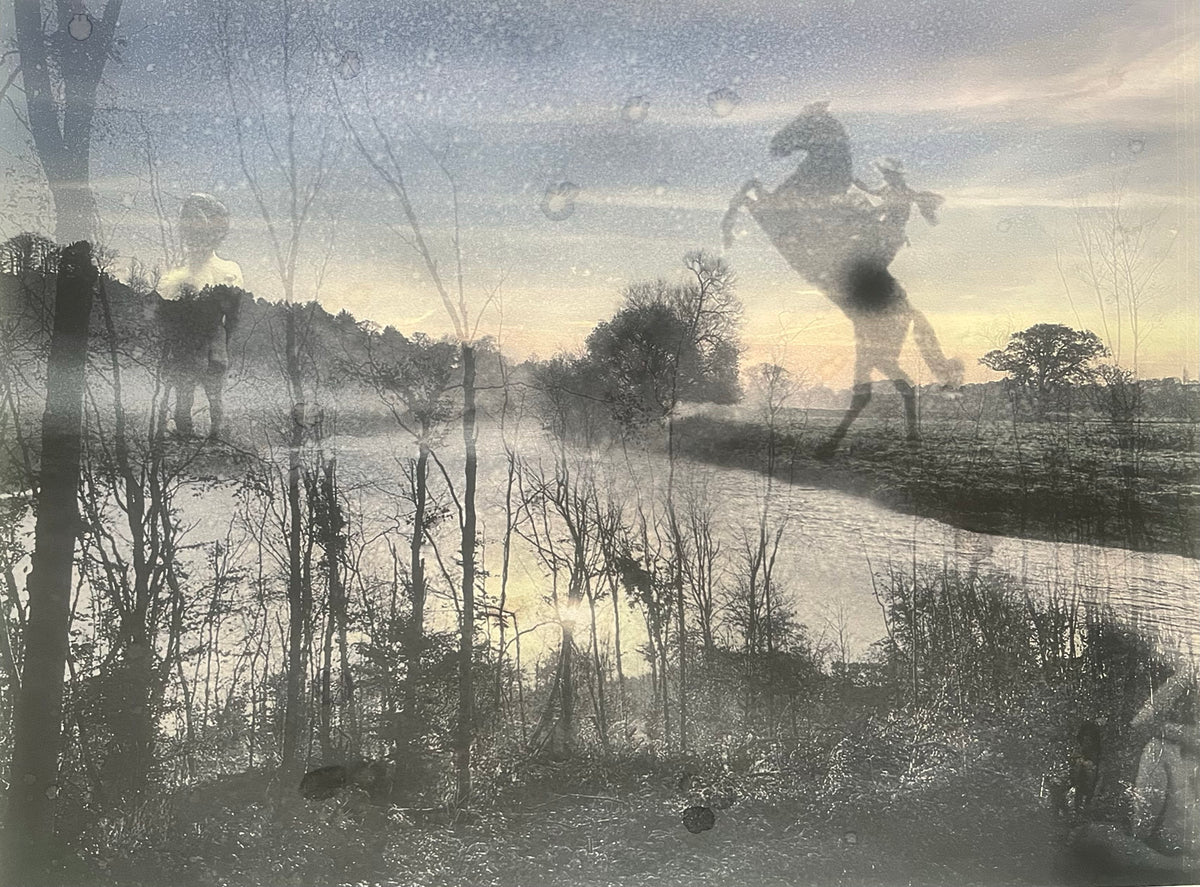
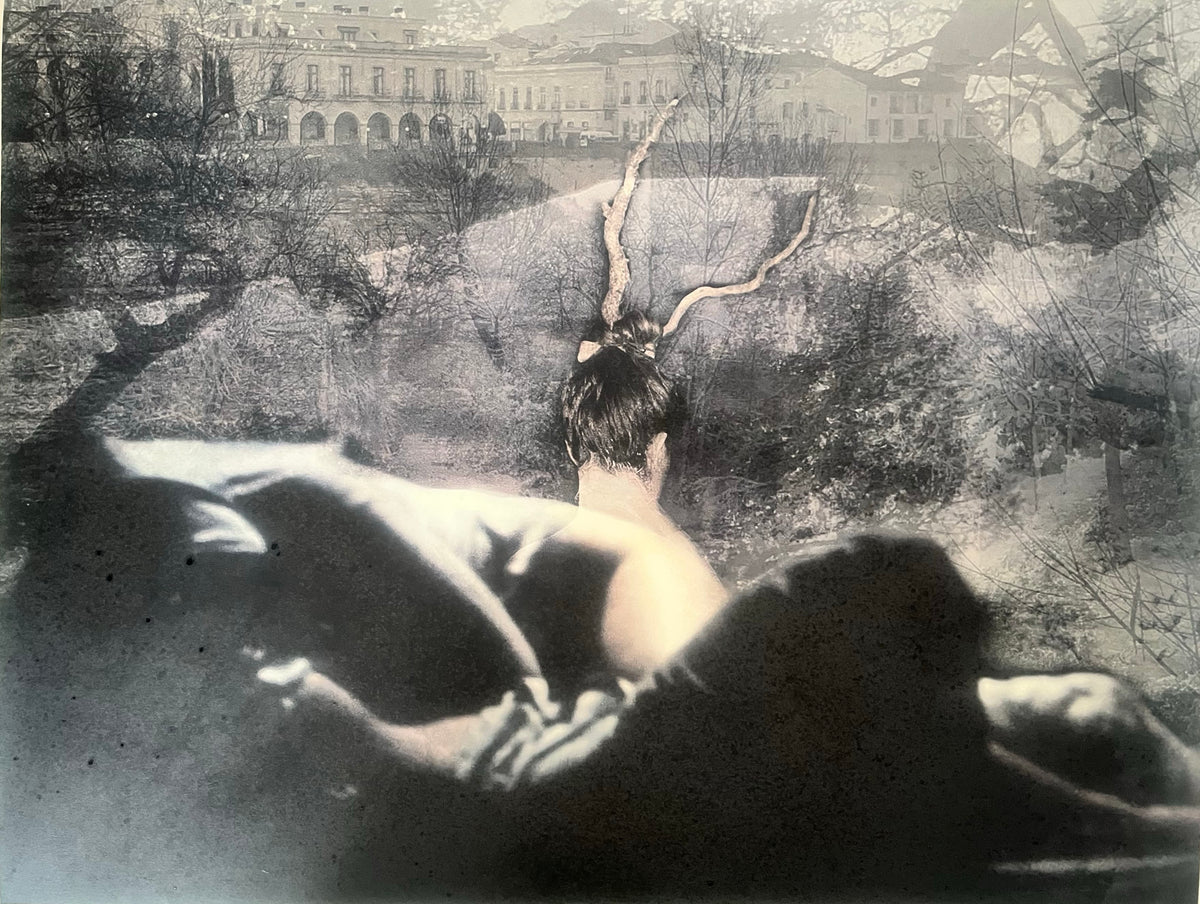
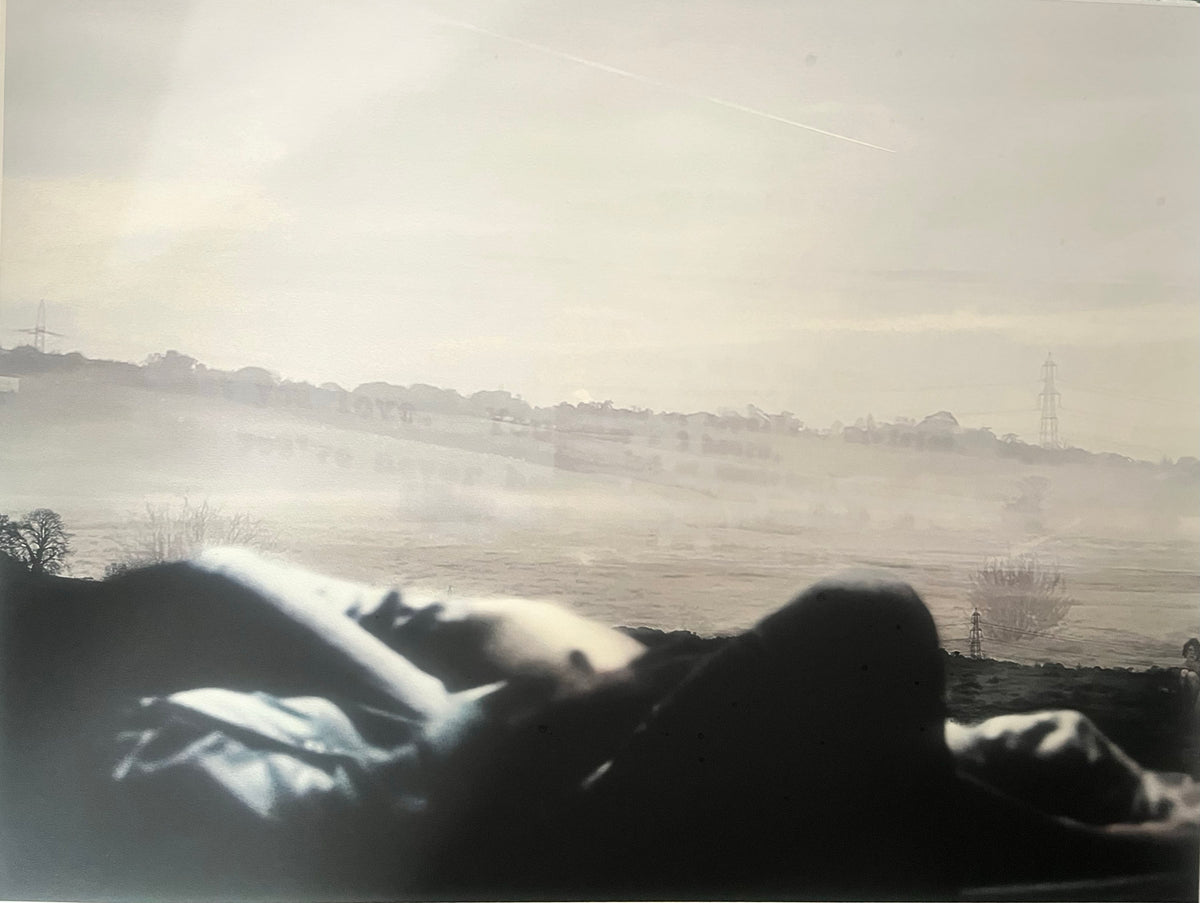
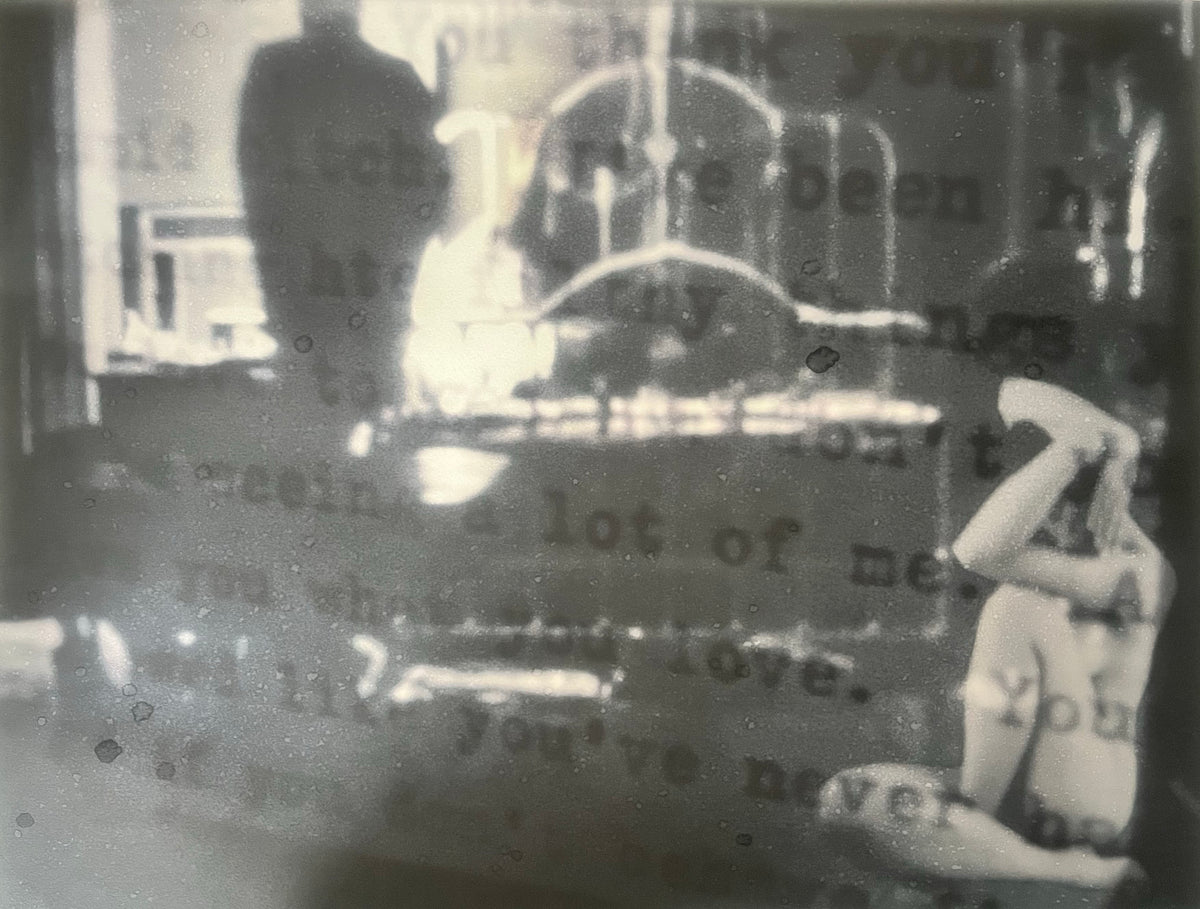
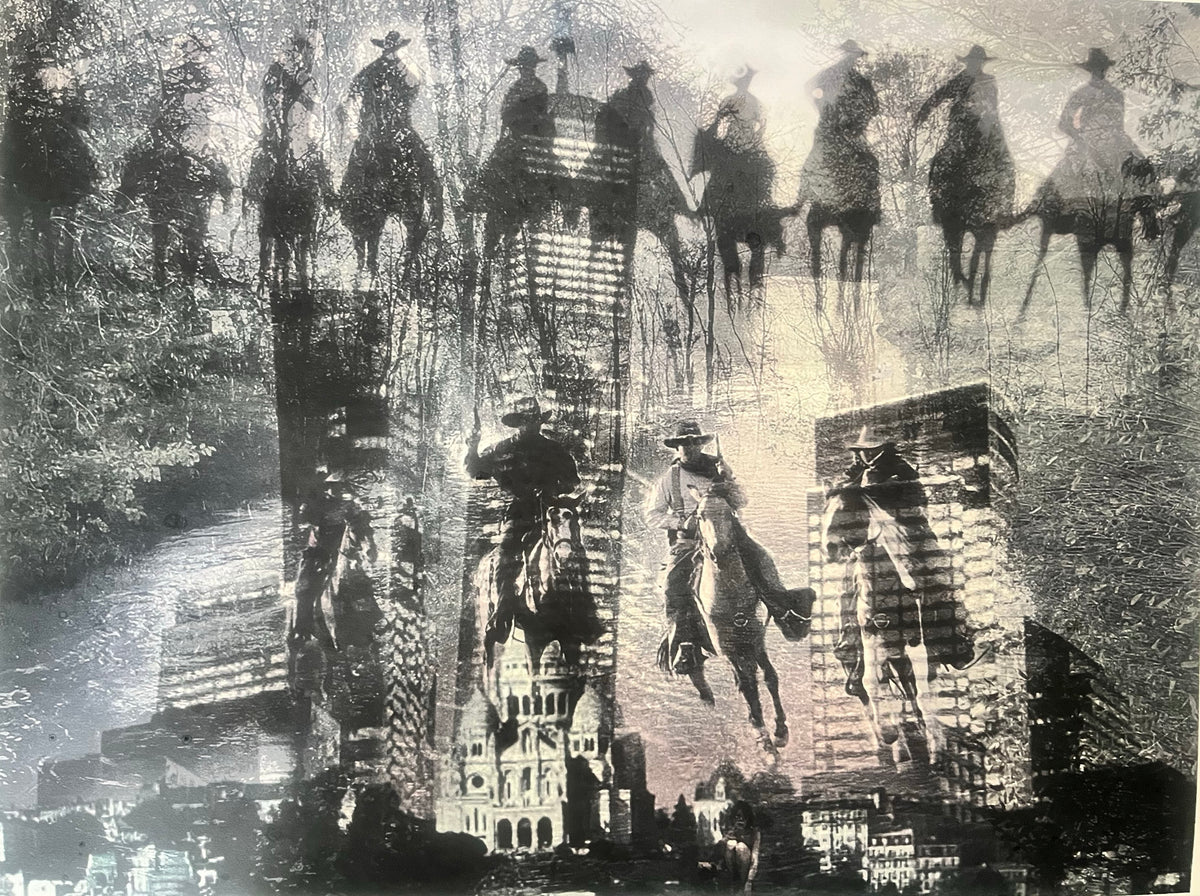
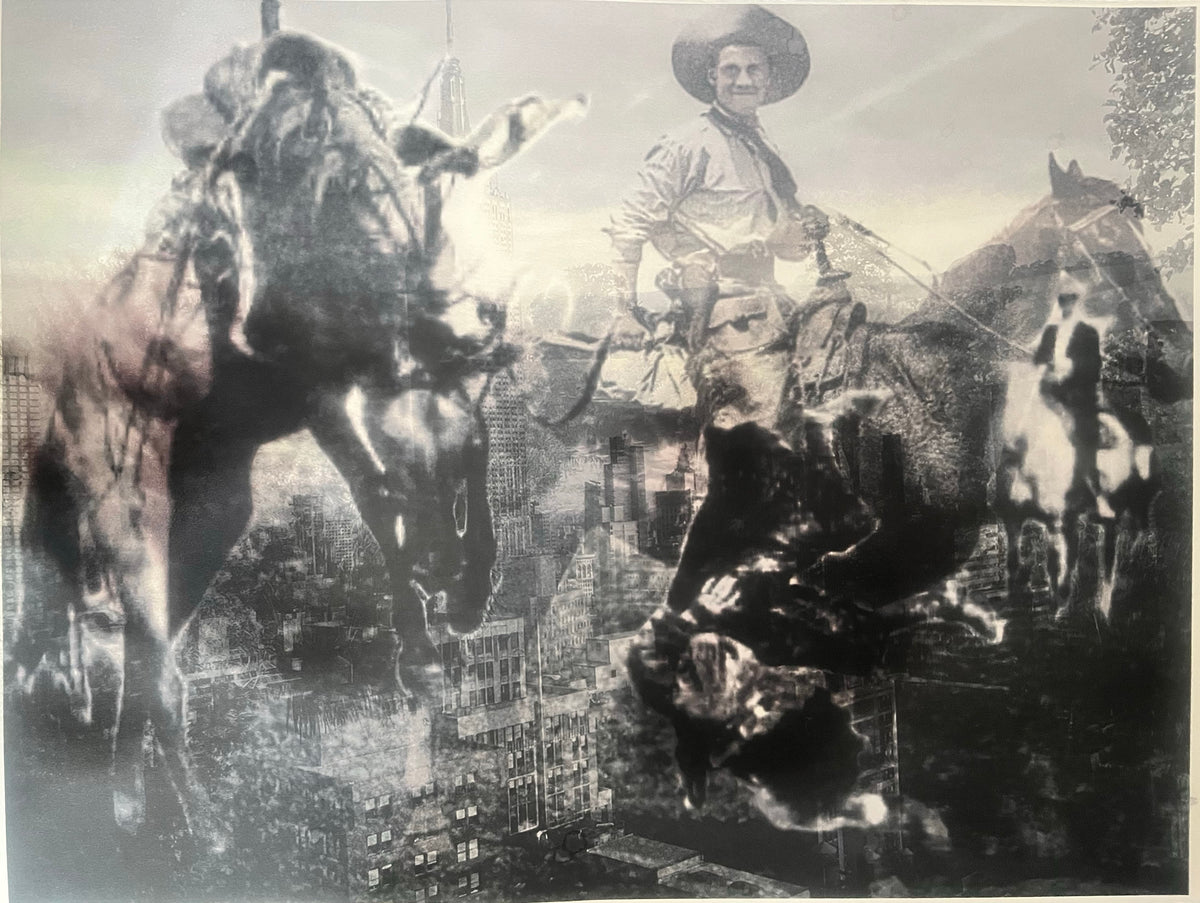
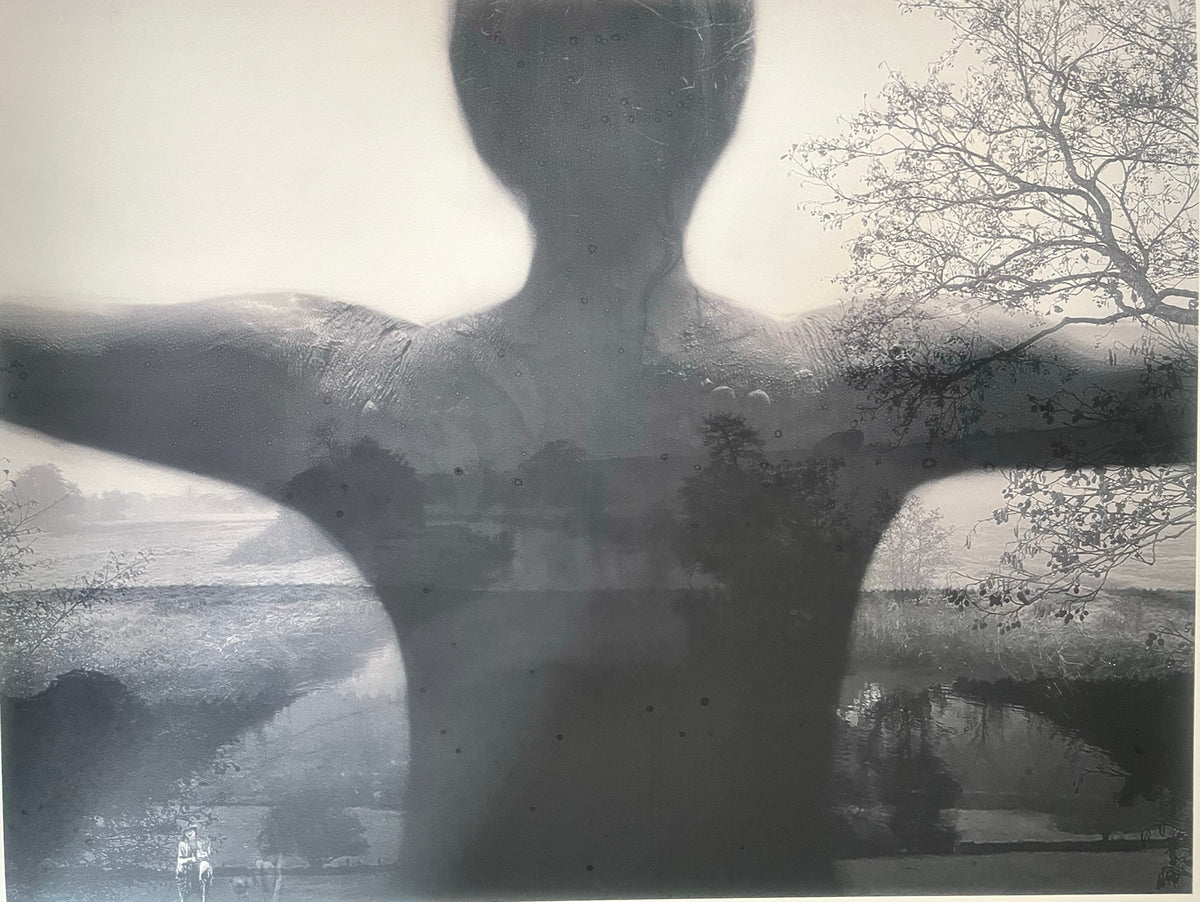
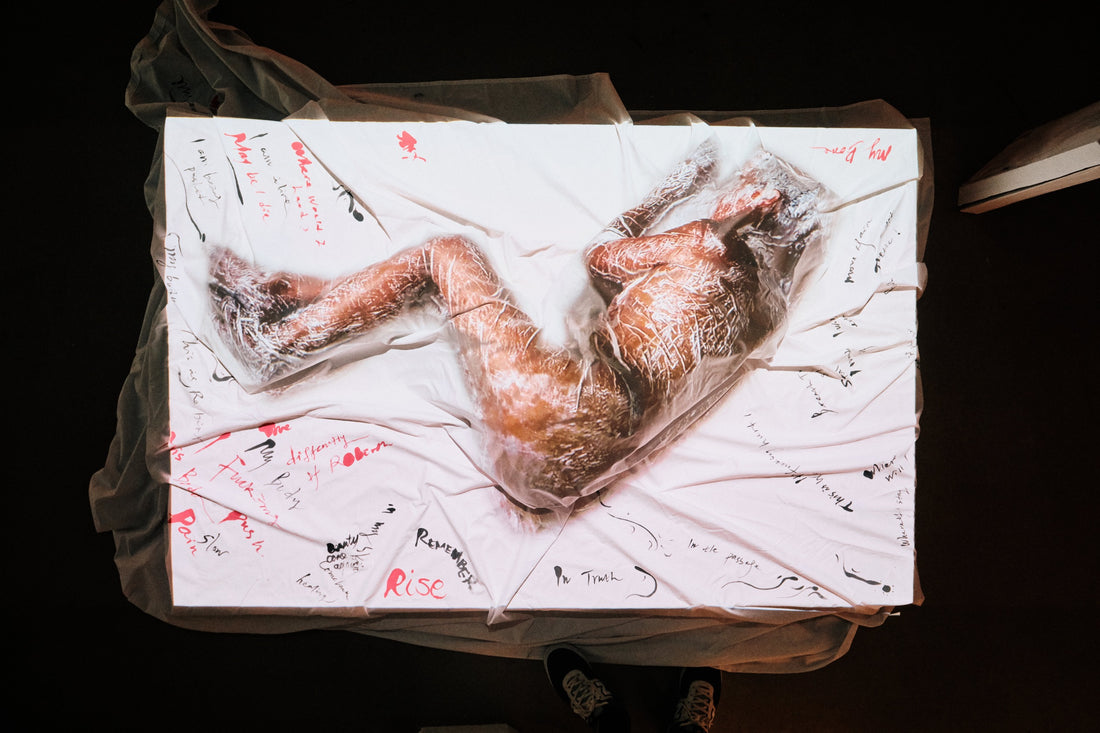
Becoming ill was a kind of death—the loss of a body, the life I had and a world I once moved through freely. Rebirth grew from that loss: a slow return shaped through art, care and the company of extraordinary women.
Created and performed with Echo Morgan and the women of Women’s Research Wānanga, the work treats creation as medicine and sisterhood as strength. At its close, the audience was invited to write upon my body: messages addressed to their own bodies or to the bodies of people they loved.
This is not a clean or graceful rebirth. It is an arrival through effort, breath, fury and the battered brilliance of the body.
Washed Ashore developed during a residency at the Barracks in Jersey, through a daily encounter with the sea and the island’s rugged edges. A sculptural body lies beneath a sheet and appears to breathe: a human presence that is also an image, a remnant and a threshold.
The work continues the body first shown in Vienna during Descansos and later held at the centre of Rebirth. Against the stark coastline, it evokes the choice between life and death in Ingmar Bergman’s The Seventh Seal. The figure may have been washed back into living, or may be reaching its end. The work deliberately leaves both possibilities open.
Wānanga: to meet and discuss; to deliberate and consider. Women’s Research Wānanga was founded in 2023 by Māori and Jèrriais artist Rychèl Thérin Scott, bringing together Emma D. McGuire, Nina Rodin, Lindsay Rutter, Dr Caitlin Shepherd and Rychèl Thérin Scott.
WRW is a women’s research collective investigating the female experience through shared reading, residencies, conversation and making. It understands knowledge as something formed through relationships—between people, experiences, materials and places—and makes space for lived experiences that are often muted, dismissed or glossed over.
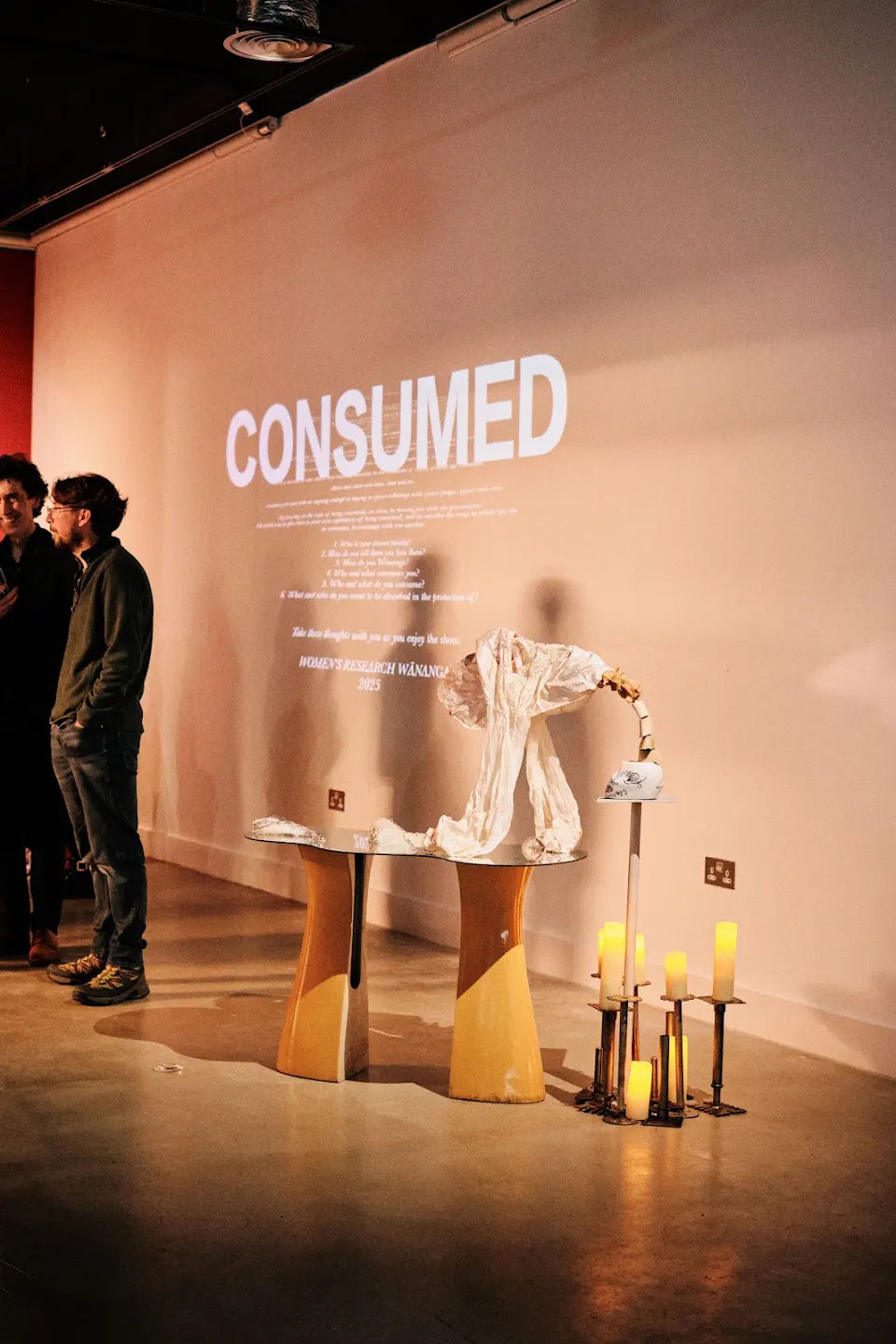
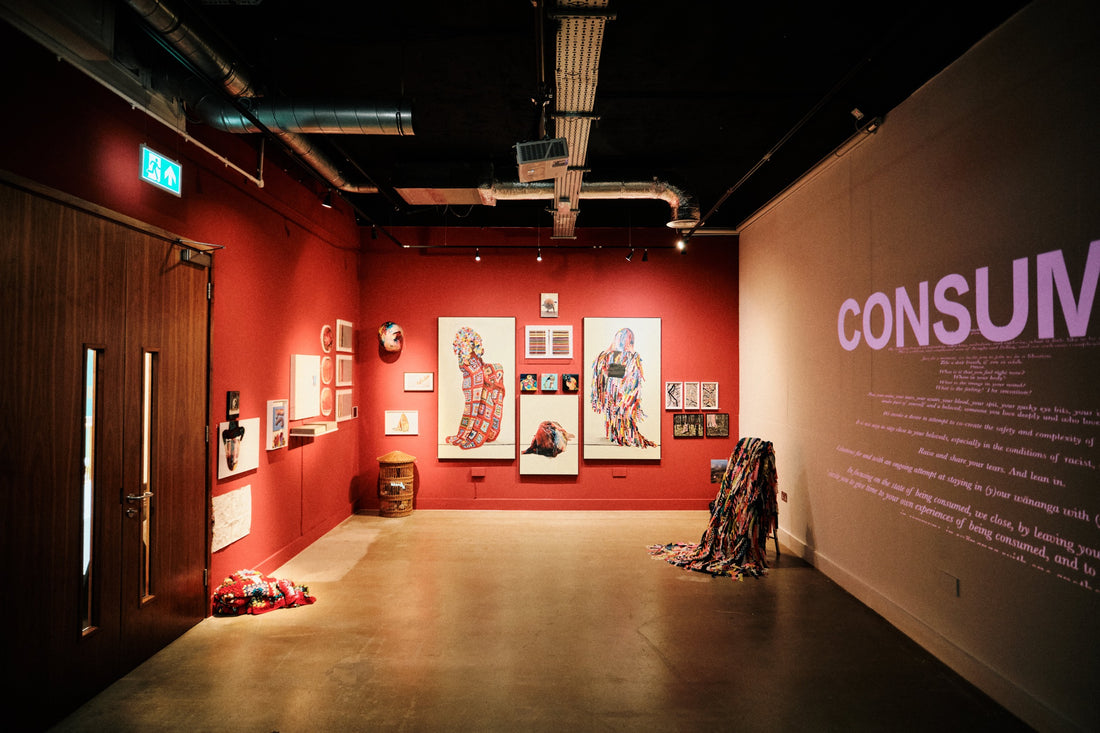
Consumed, presented at ArtHouse Jersey in 2025, placed women’s experiences front and centre. It examined difficult and disobedient bodies and minds through care, sickness, mutuality, motherhood, radical joy, matriarchal knowledge, gender, sexuality and class.
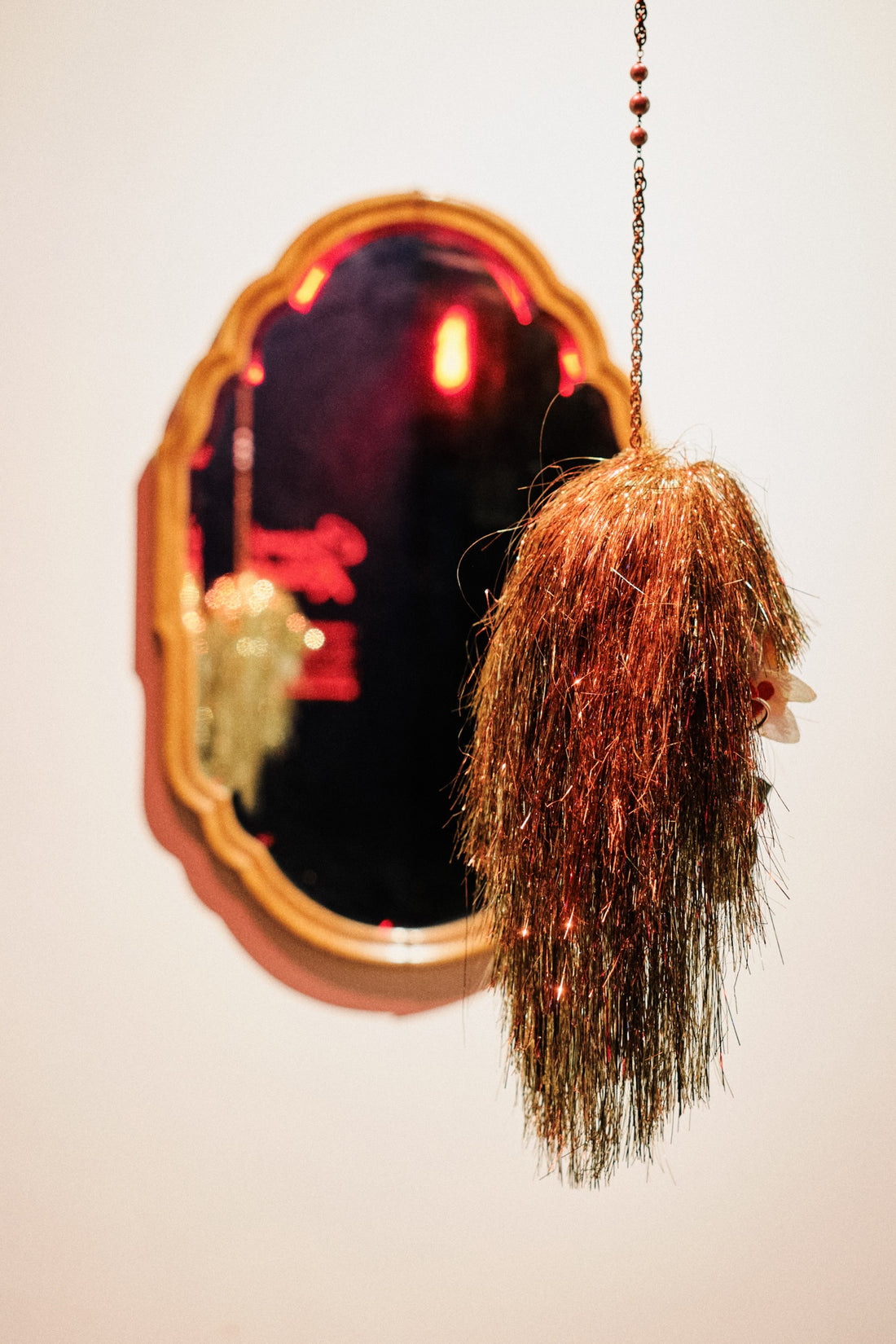
Clay has always been central to my practice as a form of protection. In earlier photographic and print series it cocooned my subjects; over the past few years it has moved beyond the image to become a physical presence in its own right.
Making with clay became a healing ritual through illness. The Shield Maidens—porcelain forms with ceramic decals and encircling feathers—stand as protectors and return to the warrior sisterhood running throughout my work. Bowls hold armies of female figures, while the anatomical heart carries my response to Palestine and words interpreted from Saul Williams’ Not In My Name.
Emma D. McGuire is a contemporary artist working with memory, embodiment, transformation and collective experience.


